Summary
What this review covers
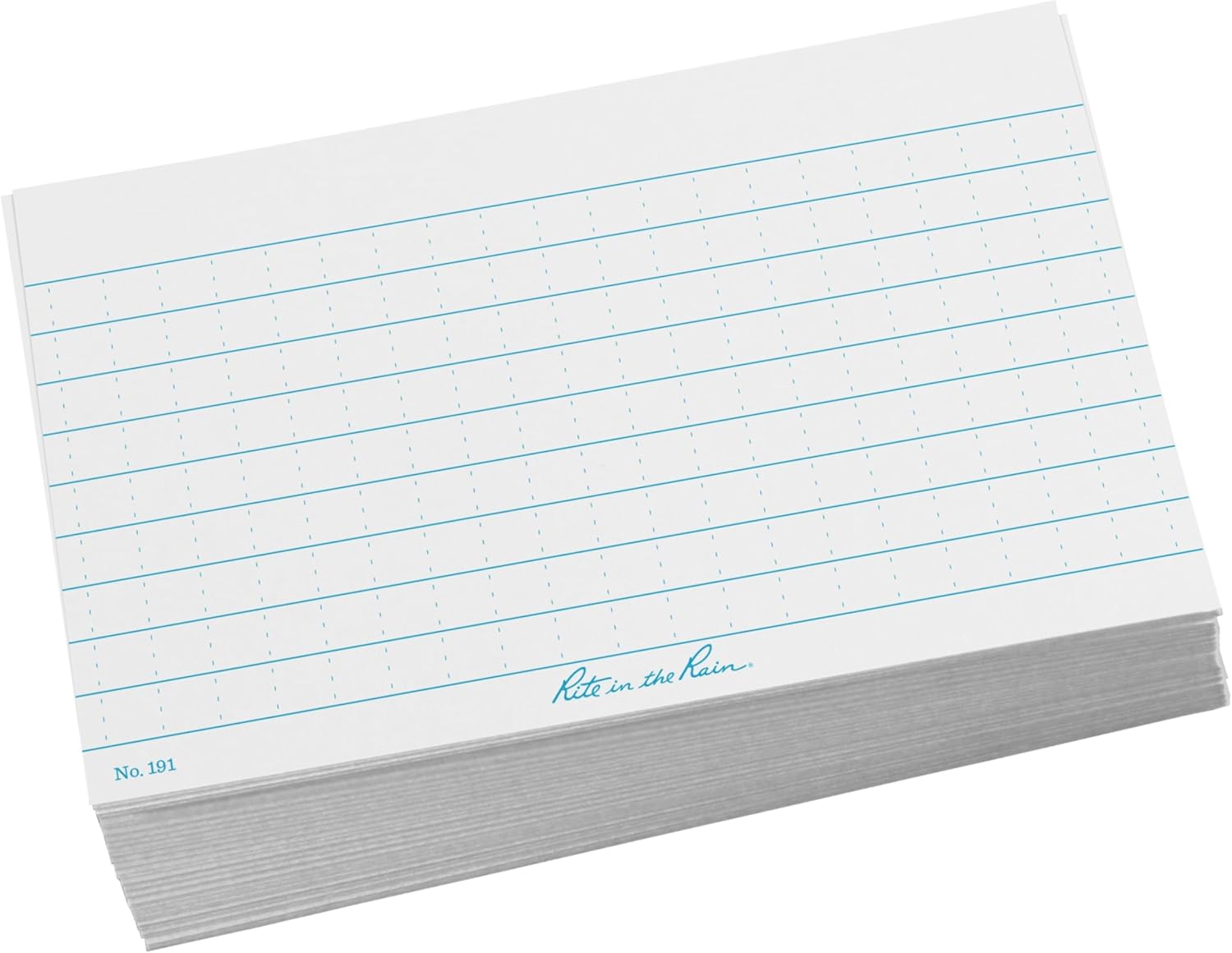
This review looks at the 3 x 5 card format, weatherproof paper, loose-card handling, and fit for sprinkler records and garden measurements.
Pros
The upside
- The 3 x 5 card size suits station names, run times, readings, and short seasonal notes.
- Weatherproof paper supports outdoor note use near sprinklers, rain gauges, and damp benches.
- Loose cards can move between a field holder, binder pocket, controller cabinet, and service caddy.
Cons
The tradeoffs
- Loose cards need a holder, ring, pouch, or return spot.
- All-weather cards pair well with pencil or pens made for coated paper.
Who it is for
Fit and feel
What to know:
Name the station first, then add the date and reading. Keep finished cards in the same place as the controller schedule so the next service pass starts with the right route.
For the full station-label routine, read the sprinkler station record and outdoor label guide.
Where to check it
Check Rite in the Rain 191 Weatherproof Index Cards
Open the current merchant listing if the buyer fit and tradeoffs still line up.
- Amazon opens the Rite in the Rain 191 index card product page.
Breakdown
Full review
Weatherproof cards for station notes
Rite in the Rain 191 Weatherproof Index Cards give sprinkler checks a small outdoor page. The 3 x 5 size can hold a station name, run time, nozzle note, catch-cup reading, rain gauge number, or valve box location.
The card format works well when a gardener wants one note to move from the yard to the controller cabinet or garden record binder.
Useful for measured sprinkler checks
Sprinkler readings are useful when they keep their date, station name, and location. A loose card can carry those details during the check, then return to a dry sleeve or record box after the zone is finished.
Use one card per station or one card per seasonal service pass. Short lines leave room for follow-up notes after a nozzle change, cap check, or valve visit.
What to expect from loose cards
Loose cards need a home. A badge holder, binder pocket, card box, ring, or small pouch keeps them from drifting around the shed.
The paper is made for wet conditions, but the writing tool still matters. Pencil and all-weather pens are common companions for this style of card.
Fit and use
Choose these cards for sprinkler station records, catch-cup readings, rain gauge notes, valve box labels, seed shelf reminders, and short outdoor garden lists.
What to know
Name the station first, then add the date and reading. Keep finished cards in the same place as the controller schedule so the next service pass starts with the right route.
For the full station-label routine, read the sprinkler station record and outdoor label guide.