Summary
What this review covers
This meter fits gardeners who want a dedicated pH reading tool for beds, shrubs, lawns, and containers during regular soil checks.
Pros
The upside
- The probe design keeps pH checks close to the planting area.
- The meter includes plant recommendations for hundreds of plants.
- The handheld format suits quick checks before pH amendment decisions.
Cons
The tradeoffs
- Probe readings need moist, workable soil and a clean probe surface.
- A pH reading belongs beside plant preferences, amendment labels, and recent bed history.
Who it is for
Fit and feel
What to know:
Probe meters need clean contact with workable soil. Very dry, compacted, or freshly amended soil can make the routine harder to read well. Give amendments time, keep the probe clean, and use repeat checks to build a steadier picture of each bed.
Where to check it
Check Luster Leaf 1840 Rapitest Soil pH Meter
Open the current merchant listing if the buyer fit and tradeoffs still line up.
- Amazon opens the Luster Leaf 1840 Rapitest Soil pH Meter product page.
Breakdown
Full review
A dedicated pH check for garden soil
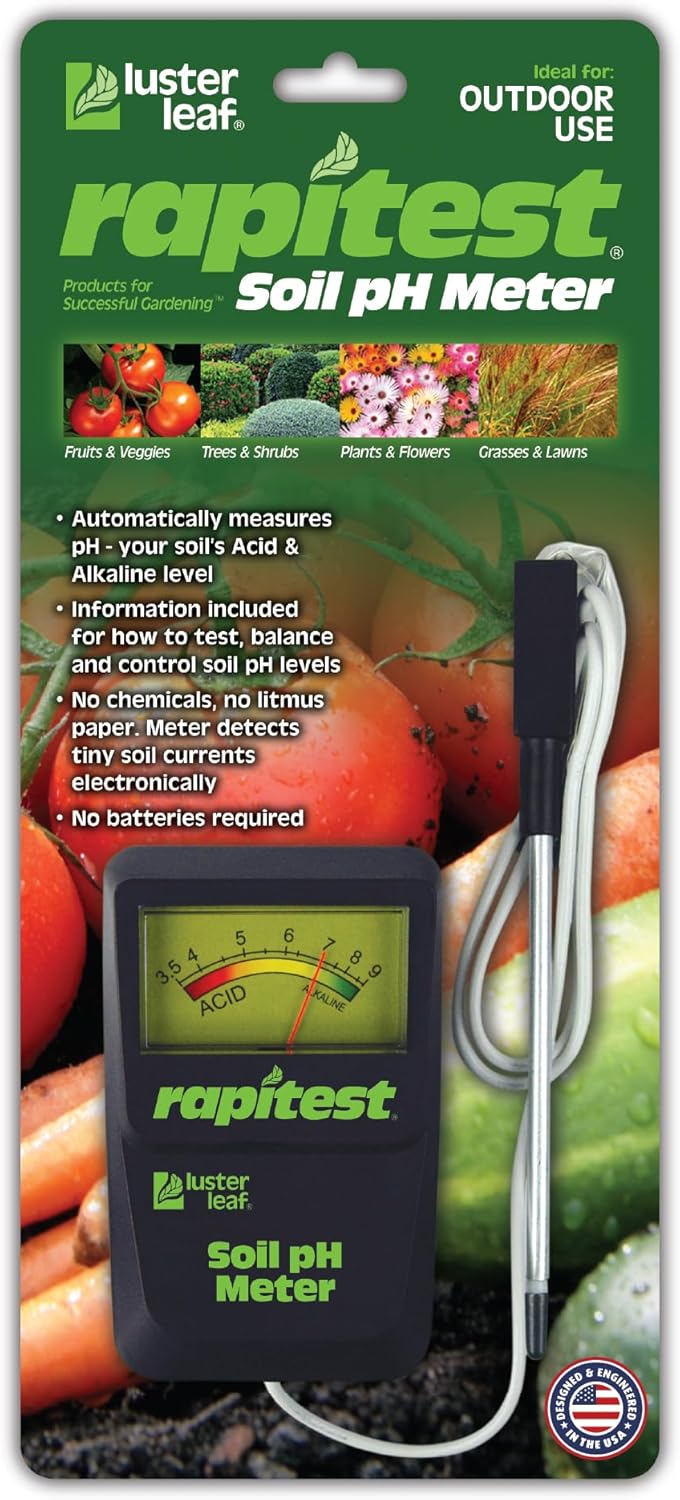
The Luster Leaf 1840 Rapitest Soil pH Meter is built around one question: where does the soil sit on the pH scale? That single reading can shape the way a gardener thinks about blueberries, hydrangeas, vegetables, lawn patches, flowers, shrubs, and container soil.
The probe format keeps the routine direct. Prepare the soil according to the product directions, place the probe, wait for the reading, and note the result before choosing any pH amendment.
The narrow focus is useful
Soil pH can influence how plants use nutrients. A dedicated pH meter gives that question a place in the routine before garden lime, soil acidifier, compost, or fertilizer enters the bed.
The meter also includes recommendations for hundreds of plants, which helps connect the number on the dial to the crop or shrub in front of you. That connection is especially useful when a bed has mixed plantings with different soil preferences.
What it feels like to use
This tool fits a short garden walk. Check a bed section, wipe the probe, write down the reading, and move to the next spot. The work feels simple when the soil is moist, loose enough for the probe, and labeled clearly in your notes.
The reading should be treated as one clue. Leaf color, root health, recent fertilizer use, watering, mulch, and plant stage all matter when a gardener decides what to do next.
What to know
Probe meters need clean contact with workable soil. Very dry, compacted, or freshly amended soil can make the routine harder to read well. Give amendments time, keep the probe clean, and use repeat checks to build a steadier picture of each bed.
Good fit
Choose this meter when pH is the main question and you want a dedicated tool for quick checks around edible beds, flowers, shrubs, lawns, and container plantings.