Summary
What this review covers
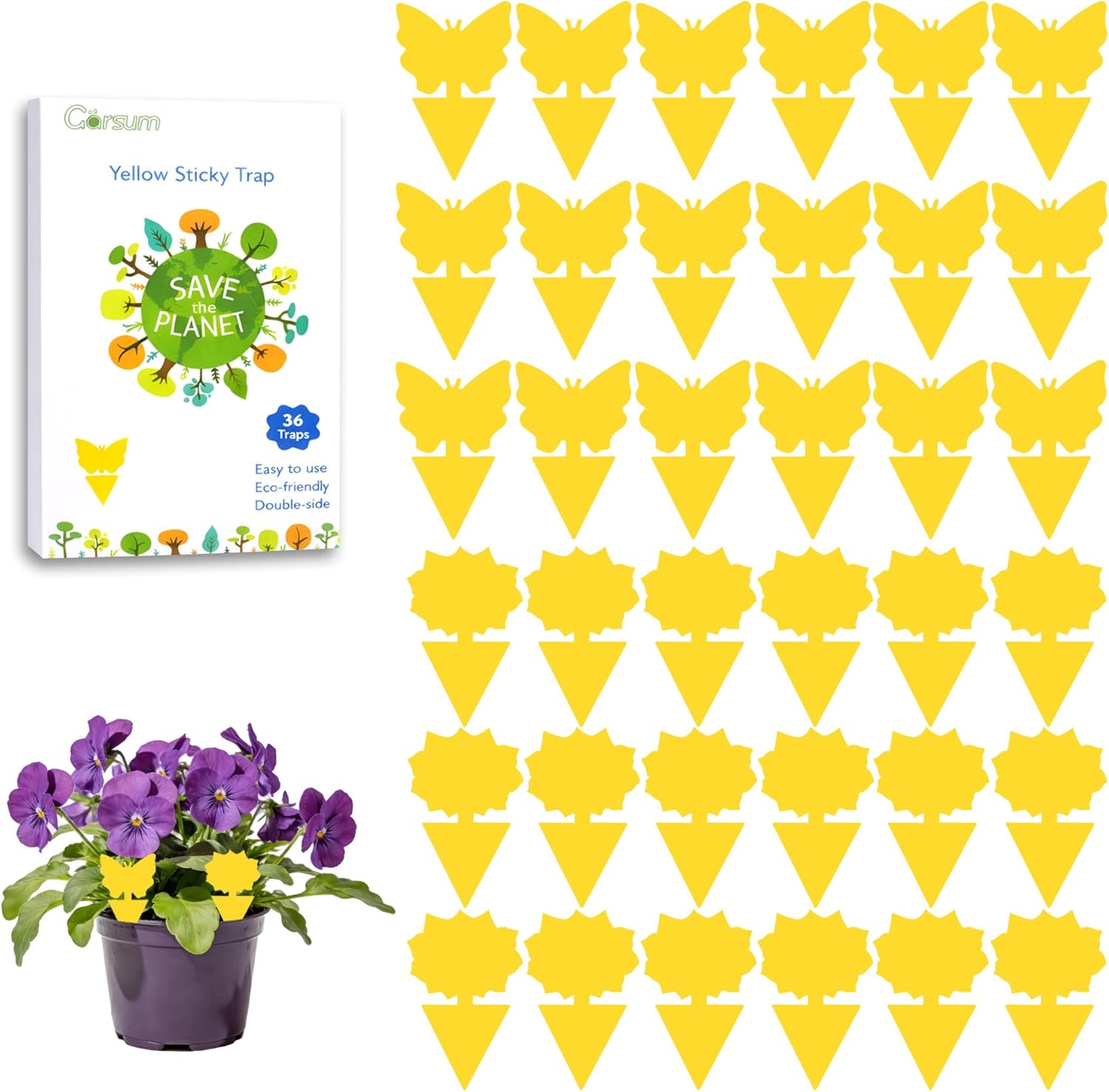
This 36 pack fits gardeners who want passive monitoring near houseplants, greenhouse benches, seed-starting shelves, and patio containers.
Pros
The upside
- The 36 pack gives gardeners plenty of cards for houseplants, greenhouse shelves, patio pots, and seed-starting areas.
- The yellow paper cards help make small flying insects easier to notice during regular plant checks.
- The traps are simple to place near soil, foliage, and container groups without mixing or spraying.
Cons
The tradeoffs
- Sticky cards are a monitoring tool, so they belong alongside plant checks and source cleanup.
- The bright yellow color is visible in pots and shelves, which becomes part of the look of the plant area.
Who it is for
Fit and feel
Good match:
This 36 pack fits gardeners who want a simple way to watch for small flying insects around houseplants, greenhouse plants, seed trays, and patio containers.
What to know:
Sticky cards help show activity, and they pair well with regular checks of soil moisture, dropped leaves, old fruit, and crowded foliage. Replace cards when the surface fills, bends, or loses its clean sticky face.
Where to check it
Check Garsum Fruit Fly Sticky Trap 36 Pack
Open the current merchant listing if the buyer fit and tradeoffs still line up.
- Amazon opens the Garsum Fruit Fly Sticky Trap 36 pack product page.
Breakdown
Full review
A quiet signal near the plants
Garsum Fruit Fly Sticky Traps are yellow paper cards made for plant areas where tiny flying insects can be hard to count by sight. Place a card near the soil line, beside a pot, or along a greenhouse shelf, then check it during the normal garden walk.
That simple visual cue helps when fungus gnats, whiteflies, and other small flying insects begin moving around plants. The card does not need mixing, batteries, or setup beyond placement.
The 36 pack covers several growing spots
A 36 pack is useful when the plant collection is spread across a few places: windowsill herbs, seed-starting trays, greenhouse shelves, patio pots, or a porch plant group. Fresh cards can be placed where activity is easy to miss.
The cards also make it easier to see whether one shelf or container area is drawing attention during the week.
Placement shapes the routine
Sticky traps work as part of observation. They can sit near soil, foliage, or the edge of a container group where small insects travel. Checking them often keeps the gardener close to the plants and helps guide the next plant-care step.
The yellow color is bright, so the cards are visible. That visibility is useful for monitoring and worth expecting in decorative indoor plant areas.
Good match
This 36 pack fits gardeners who want a simple way to watch for small flying insects around houseplants, greenhouse plants, seed trays, and patio containers.
What to know
Sticky cards help show activity, and they pair well with regular checks of soil moisture, dropped leaves, old fruit, and crowded foliage. Replace cards when the surface fills, bends, or loses its clean sticky face.