What this review covers
Use this meter for quick moisture readings around houseplants, patio pots, raised beds, lawn patches, and garden rows.
Shop Dr.meter S10 Soil Moisture Meter
Use the product link below when you want to compare current pricing or availability.
- Amazon opens the Dr.meter S10 Soil Moisture Meter product page.
The good
- The analog dial gives a visible moisture cue at the plant.
- Battery-free operation keeps the meter ready in a garden caddy.
- The long probe suits pots, beds, lawn patches, and container soil.
The tradeoffs
- Firm soil may need hand loosening before the probe goes in.
- Wipe the probe after use before soil dries on the sensor.
A battery-free moisture cue
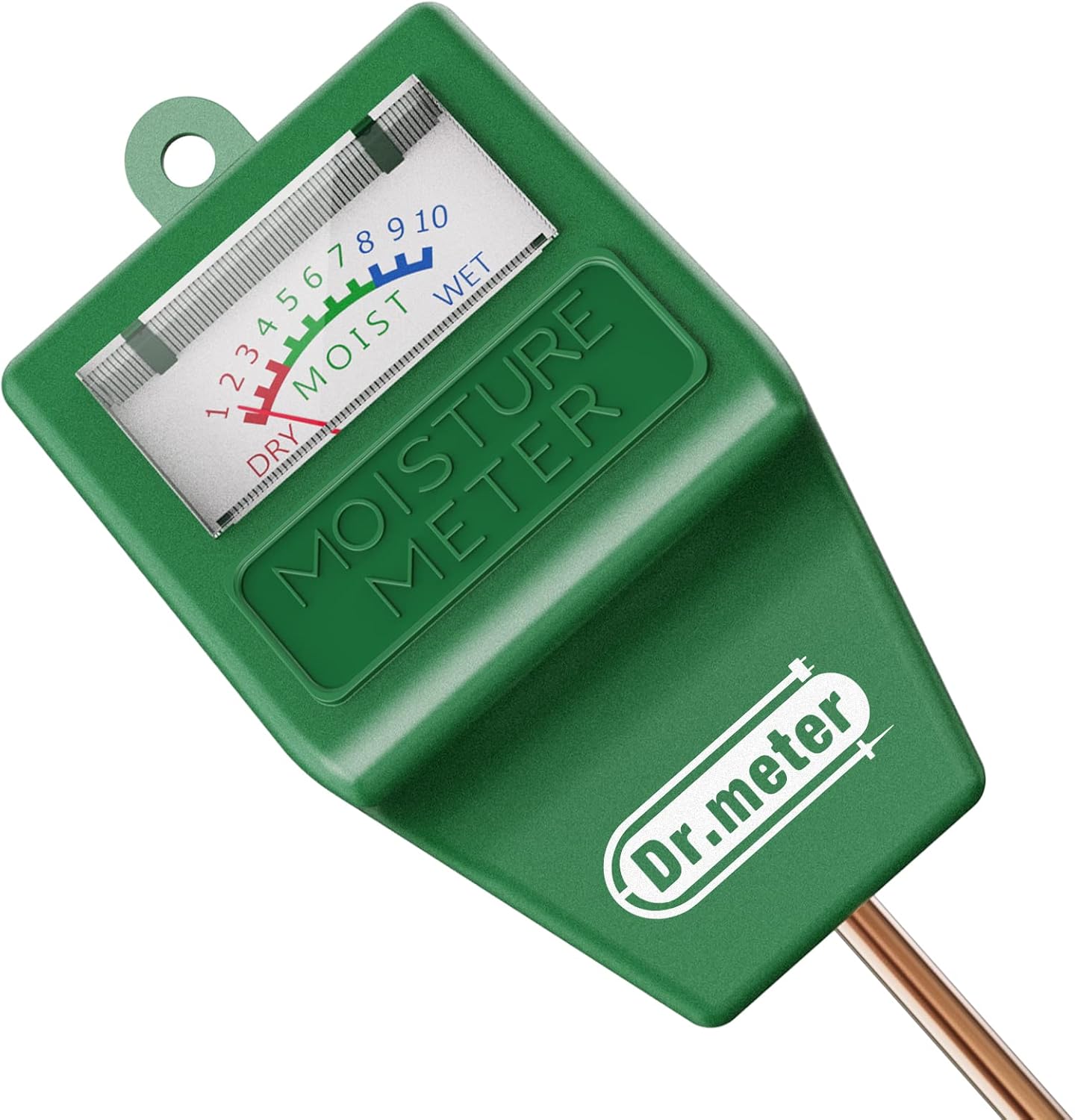
The Dr.meter S10 Soil Moisture Meter keeps the watering check direct. Push the probe into workable soil, read the dial, and use that cue beside the plant’s leaf posture, pot weight, soil surface, and recent watering history.
The battery-free design suits a shed shelf, patio caddy, or indoor plant basket because the meter stays ready between watering rounds.
A dial that belongs near the plant
The analog face gives a quick visual cue at the spot being checked. That makes it useful for potted herbs, houseplants, porch planters, raised beds, and lawn patches where surface dryness can show before the root zone has changed.
Use the same insertion depth and the same general spot when tracking a pot or bed section across several days. Notes stay clearer when the reading routine stays steady.
Where it fits
This meter fits gardeners who want a battery-free moisture check for regular hand watering, container care, and soil-watching walks.
What to know
Guide the probe carefully around roots and container walls. Dense bark, stones, or compacted soil can affect probe contact, so prepare a gentle insertion path and clean the stem after each session.