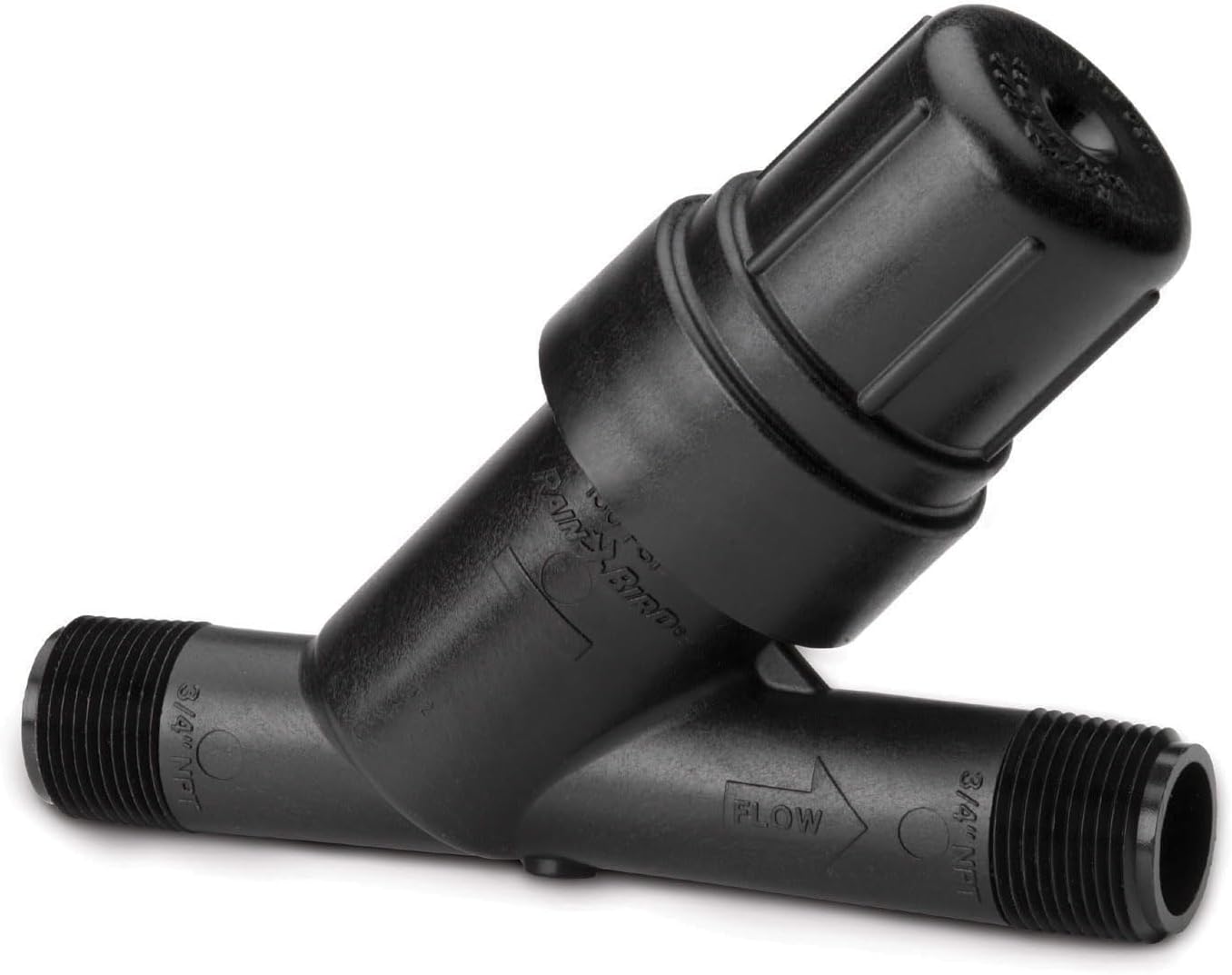
Small watering routes stay readable when their screen points are easy to find. A faucet-side filter, inline Y-filter, or screened washer gives grit a visible place to collect before water moves into small tubing, emitters, micro sprays, or misting nozzles.
The goal is simple: keep the screen close enough to inspect, label the route clearly, and leave room for the cap or washer to come out during cleanup.
For the wider source assembly, read the faucet-side watering control guide. For mainline tubing, pressure pieces, backflow fittings, and tee fittings, read the drip irrigation mainline guide. For small hose repair parts, read the hose-end repair menders, screen washers, and shutoff guide. For roof-water screen points above garden downspouts, read the gutter outlet leaf screen guide. For carbon and KDF garden-hose filters, service-date cards, and hose-protector planning, read the garden hose water filter guide.
Start where the water enters the route
A filter belongs where it can be reached without pulling apart the planting bed. For many backyard setups, that means a faucet station, a timer outlet, a short leader hose, or the first section of a drip mainline.
The Rain Bird RBY075S in-line Y filter gives compatible 3/4 inch male-thread routes a visible black filter body with a molded flow arrow and an angled screen cap.
The Orbit 67736 drip Y-filter uses a 3/4 inch MPT format for compatible irrigation assemblies. It belongs in a route where adapters, thread seal needs, and cap access have all been planned together.
Use pressure and screen parts with a clear order
Small tubing needs a source-side plan that is easy to follow from the faucet outward. A timer, splitter, backflow fitting, pressure reducer, filter, and tubing adapter should sit in an order that matches the route and leaves each service part visible.
The Rainbird PRF075RBY pressure regulating drip filter combines a 30 PSI pressure step and a 200 mesh screen in one body for compatible drip layouts.
The Rain Bird HT075BFFSX backflow preventer and 150 mesh filter adds a source-side screen with backflow protection for compatible drip-style routes. The Rain Bird FCKIT faucet connection kit gathers several faucet-connection parts into one kit for matching mainline setups.
Keep faucet filters reachable
Faucet filters are useful when the screen can be reached by hand. The Mister Landscaper 150 mesh faucet filter has a 3/4 inch female hose-thread inlet, a 3/4 inch male hose-thread outlet, and a screen that slides out after the end cap opens.
That format suits compatible micro spray and dripper routes where the gardener wants the screen close to the faucet station and away from buried planting areas.
Store small screened parts together
Screened washers still have a place in the same maintenance bin. The Camco 20183 hose filter washer pack gives a compact refill for compatible hose-thread connections. The Danco 80070 hose washers with screen keeps screened seals ready for faucet, timer, splitter, sprayer, and nozzle checks.
For small misting routes, the 100 mesh misting system filter gives compatible 1/4 inch misting tubing a screen point before nozzle heads.
Carbon and KDF hose filters belong on named watering routes with service-date cards. Camco Hydro Life 52700, AQUACREST Garden Hose Water Filter for Plants, Envig Catalytic Carbon KDF Inline Garden Hose Filter, Clean Water Fun Garden Hose Filter, and Waterdrop Garden Hose Water Filter give a filtered-hose shelf its own route plan beside the screen-filter caddy.
Make cleanup part of setup
A filter is simple to care for when cleanup space is planned from the start. Keep the screen cap pointed toward open hand space, place a small rinse cup or tray near the faucet station, and label the route with thread size, pressure step, and screen mesh.
Open the route slowly after reassembly. Watch the cap, threaded joints, timer outlet, pressure piece, tubing adapter, and first few water points while the soil is still dry enough to show drips.
Open inline filter and screen reviews
These pages cover source-side screens for compatible drip, micro spray, dripper, and hose-thread watering routes.
Bottom line
A good screen setup is easy to see, easy to open, and easy to put back together. Keep the filter reachable, match the thread format to the route, and treat screen rinsing as a normal part of drip and micro watering care.